How Does Car Insurance Work for Multiple Drivers in Quebec?
You likely believe your auto insurance premium is a fixed tax.
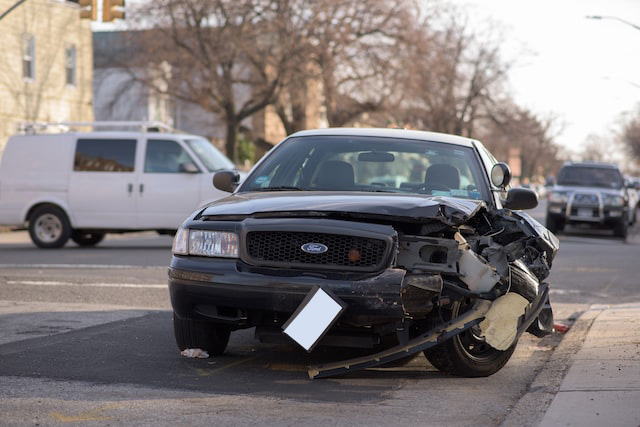
You assume adding a teenager, a spouse, or a second car simply "costs what it costs." You believe more drivers equals more risk, and more risk equals a bill you have to accept in silence.
That feeling of powerlessness is exactly what the industry relies on.
Here is the reality: Your multi-driver policy is not a static bill. It is a configurable asset.
While you cannot change your age, you have absolute control over how the drivers in your house are mathematically linked to the vehicles in your driveway.
In Quebec, you have the right to designate the "Principal Operator" for each specific car. This single choice is one of the most powerful pricing levers in the entire insurance ecosystem.
By strategically assigning specific drivers to specific cars, you can legally slash your household premium. You are not "cheating" the system. You are simply engaging with the rules of the rating manual to benefit your bank account.
Key Takeaways: Your Price Control Checklist
The "Principal Driver" Lever: You decide who is the main driver of each car. Always assign your cleanest driving record to your most expensive vehicle.
The "Old Car" Shield: Got a high-risk driver, like a teen? Assigning them to your oldest, cheapest vehicle can cut their premium surcharge by 50% or more.
The "Same-Day" Rule: Never wait for your renewal letter. Removing a driver the exact day they move out triggers a refund of the unearned premium.
The "Apartment" Exception: Even if your child moves out for school, keeping them as an "occasional student driver" is often smarter than removing them entirely.
The Strategy: Don't guess. Use Panda7's quoting engine to test different driver-vehicle combinations and lock in the setup that saves you the most.
The 3 Levers of Household Risk
Most drivers view their policy as a single, unchangeable number. This is a mistake. Your premium is the sum of several moving parts.
The good news? You hold the wrench that adjusts them.
The insurance company's algorithm is designed to protect them from risk. But the rules of the Quebec market give you rights to define that risk accurately. Here are the three specific levers you can pull today.
Lever 1: Principal Operator Designation
This is your heavy hitter.
For every single vehicle on your policy, one person must be listed as the "Principal Operator." In plain English: Who drives this car the most?
Why it matters: The insurer bases the bulk of that vehicle's price tag on this specific person. They apply that person's risk profile (age, gender, history) to the value of the car. You have the right to determine who this is based on actual usage. If you don't, the insurer might default to the setup that maximizes their revenue.
Lever 2: Mid-Term Adjustments
You are never stuck.
A common myth is that you must wait until renewal to make changes. This costs you money.
The Fix: You can add or remove drivers on any day of the year. Did your son move out this morning? Remove him this afternoon. Your premium is calculated daily. Pulling this lever stops you from paying for risk that no longer exists.
Lever 3: Household Structure
Insurers look at the ratio of drivers to vehicles.
If you have three drivers and two cars, you control how that "third" driver is treated. By proactively defining their status, you prevent the insurer from assuming the third driver drives your brand-new SUV every day. You can explicitly anchor them to the cheaper car, lowering their impact on your bill.
Strategy #1: The "Firewall" (Pairing Best Driver with Most Expensive Car)
This is the single most effective strategy for reducing costs in a multi-vehicle household.
It relies on understanding the deep math of risk pricing.
Think of the "Principal Operator" as the Price Anchor. The insurer looks at the car and then they look at the main person driving it. That driver's risk profile sets the baseline insurance price for that specific vehicle’s VIN.
Here is the strategy.
Imagine you have two cars:
- The Asset: A 2025 SUV worth $60,000. (Expensive to repair)
- The Beater: A 2015 sedan worth $5,000. (Cheap to repair)
And two drivers:
- Driver A: Perfect 20-year record. (Low Risk)
- Driver B: Recent at-fault accident. (High Risk)
You have a critical choice to make.
The Expensive Default: If you assign Driver B (High Risk) to the 2025 SUV (High Cost), you are making a mathematical error. You are multiplying a High Risk Factor by a High Cost Asset. This creates the maximum possible price.
The Optimized Choice: If Driver A (clean record) drives the 2025 SUV the majority of the time, you must designate them as the Principal Operator.
This matches the "Lowest Risk" driver with the "Highest Risk" asset.
Driver B is then assigned to the 2015 sedan. Because the sedan is worth less, the surcharge for their recent accident is applied to a much smaller base amount. A 50% surcharge on a $500 premium is far less painful than 50% on a $2,000 premium.
How to Execute This Strategy
When you reach the driver assignment step of your quote, link the driver with the cleanest record to the vehicle with the highest replacement cost. You are building a firewall between your most expensive asset and your highest risk factor.
Real-World Impact: A Quebec Case Study
| Scenario | Vehicle 1: 2025 SUV (Financed) | Vehicle 2: 2015 Sedan (Liability Only) | Total Monthly Premium |
| The Trap (High-Risk Driver on SUV) | $185/month | $55/month | $240/month |
| The Strategy (Clean-Record Driver on SUV) | $125/month | $78/month | $203/month |
| Monthly Savings | $37/month ($444/year) |
Note: Premiums are illustrative based on current Quebec risk rating trends. Your actual savings will depend on your specific profile.
Why this works
According to data from the Groupement des assureurs automobiles (GAA), claims are attributed to the custodian of the vehicle at the time of the accident. This means the driver designated as principal operator has the greatest statistical impact on that vehicle's premium. By aligning your best history with your biggest asset, you are mathematically minimizing the insurer's exposure. They reward you for it.
Broker Script: How to Ask for This
Nervous about "saying the wrong thing"? Use this script.
- You: "I would like to review the Principal Operator designations for my vehicles."
- You: "I drive the [2025 SUV] the majority of the time for my daily commute. My spouse drives the [2015 Sedan] for their errands."
- You: "Please ensure the policy reflects that I am the Principal Operator on the SUV and my spouse is the Principal Operator on the Sedan. I want to make sure the risk ratings are applied to the correct vehicles."
Strategy #2: The "Old Car Shield" (The Firewall for Teen Drivers)
Adding a teenager to your policy is stressful. Parents often see premiums double.
However, you can cushion this blow by using the "Old Car Shield."
If your household has three cars, and one of them is an older model you own outright, you have a massive opportunity. By designating your high-risk teen as the principal operator of that specific, low-value vehicle, you contain their risk rating to that car.
Do the math: The surcharge for a young driver is usually a percentage of the vehicle's base rate.
- 50% of a $2,000 premium (New Car) = $1,000 increase.
- 50% of a $600 premium (Old Car) = $300 increase.
By formally assigning the teen to the "beater," you save $700 a year.
The Golden Rule: This must be the truth. The teen must actually drive that car the most. If they crash your new Mercedes while listed as the principal driver of the 1998 Civic, the insurer may investigate. However, if your family usage legitimately supports this setup, it is the most effective way to lower your bill.
The "Occasional Driver" Nuance Even if the teen is assigned to the old car, they are usually still listed as an "occasional driver" on the other vehicles. This ensures they are covered if they need to borrow the family SUV. However, because they are not the principal driver of the expensive car, the premium impact on that vehicle is significantly lower.
Managing the "Extra" Driver (The Floating Risk)
What happens if you have three drivers but only two cars? This creates a "floating risk" scenario.
In this situation, the "extra" driver is typically rated as an "Occasional Operator."
The Trap: Some insurers' systems will default to rating the Occasional Operator on the vehicle with the highest premium, assuming the driver will always want the "nice car."
Your Move: Proactively request that the Occasional Operator be assigned to the least expensive vehicle on the policy. Anchoring their rating to the cheaper vehicle prevents the surcharge from inflating your bill unnecessarily.
The "Phantom" Savings Strategy In extreme cases, it is actually cheaper to buy a third, very inexpensive car, and assign the high-risk driver to it exclusively.
If adding your teen to your two BMWs increases your premium by $2,000 a year, but insuring them on a $2,000 Honda Civic only costs $1,200 a year, you mathematically save $800 a year by buying the third car. Plus, you have a third car.
Strategy #3: The "Same-Day" Removal Rule
One of the most persistent myths is that you should wait until renewal to make changes.
This "wait and see" approach costs Quebec drivers thousands every year.
Insurance premiums are calculated daily. You pay for coverage one day at a time. If you only use 180 days, you only owe for 180 days.
The Trigger: As soon as a driver no longer requires coverage, remove them.
- They moved out: Child moves to their own apartment.
- They bought a car: Spouse insures their new car on a separate policy.
- They got their own policy: Even if living with you, if they have their own policy, they can often be excluded.
The Payoff: Remove a high-risk driver six months before renewal, and you trigger a prorated refund for the remaining time. If their surcharge was $100/month, you get most of that $600 back as a refund.
How to Remove a Driver for Immediate Savings
- Identify the Trigger Event: Confirm the specific date the driver moved out or obtained their own insurance.
- Gather Proof: If they have their own policy, get their new policy number.
- Contact Your Provider: Call or use Panda7’s platform.
- Request "Effective Date" Removal: State: "I want to remove this driver effective [Date]." Do not ask "if" you can.
- Confirm the Refund: Ask for the exact pro-rated refund amount.
The Multi-Vehicle Discount & Bundling Math
A common question: "Is it better to have separate policies or to bundle them?"
In almost every scenario, the Multi-Vehicle Discount makes bundling the superior choice.
Insurers want to lock you in. They offer volume discounts, typically 10% to 15% off the premium for each vehicle.
The Math of Bundling: Imagine two cars costing $1,000 each separately.
- Separate Policies: $1,000 + $1,000 = $2,000 total.
- Bundled Policy: 15% discount on both. Total = $1,700.
- Savings: $300/year just for having one policy number.
Separate Addresses? If drivers live at different addresses (like separated spouses), you usually need separate policies because the "risk location" differs. You lose the Multi-Vehicle discount.
Pro Tip: Ask your Panda7 broker if a "Multi-Policy" loyalty discount can replace the lost bundling discount.
The "Spouse Exception" & Registered Owner Rule
A common question: "Can I put the insurance in my spouse's name if they have a better record, even if the car is registered to me?"
Generally, the Registered Owner Rule states the policyholder must be the person on the registration.
The Exception: In Quebec, there is a widely accepted exception for married or civil union couples living together.
Many insurers allow you to list a spouse with a better driving record as the "Principal Operator" even if the car is registered to the partner.
Why This Matters: Insurers use "Insurance Scores" (credit/history) to determine base rates. If your spouse has a perfect record and you don't, listing them as Principal Operator can significantly lower the base rate. You must be transparent, but leveraging your spouse's score is a perfectly legal strategy.
Common Law Partners: This typically extends to common law partners who have lived together for a specific period (usually 1-3 years). Inform your broker of your status to ensure the "Spouse" rating applies.
"The Boomerang Kid" and Roommates
Modern households are complex. Adult children move back. Friends share rent. Who must be on your policy?
The "Household" Rule: Insurers generally require you to list all licensed drivers living at your primary address. Why? Because anyone with access to your keys represents a risk.
The "Boomerang Kid" Scenario: Your 24-year-old moves back home. They don't have a car.
- The Trap: If you don't list them, and they crash your car, the insurer can deny the claim for "material misrepresentation."
- The Solution: List them as an "Occasional Driver" on your least expensive car.
The "Roommate" Scenario: Your roommate has their own car and insurance.
- The Strategy: You do not necessarily need to pay for them. You can often list them as an "Excluded Driver" or provide proof of their own insurance to waive the rating requirement.
The "Away at School" Nuance
If your child is at university (e.g., Sherbrooke) but you live in Montreal, don't remove them entirely.
- The Risk: If they come home and crash your car, an unlisted driver claim is a nightmare. Plus, removing them creates a gap in their insurance history.
- The Optimization: Reclassify them as an "Occasional Student Driver." Many insurers offer a massive discount (up to 50%) for students away at school, living more than 100 km away. This keeps their record continuous and protects you during visits.
Essential Endorsements (QEFs) for Multi-Driver Households
When you have multiple drivers, you have multiple risks. Standard coverage isn't enough. You need specific Quebec Endorsements (QEFs).
1. QEF 27: Coverage for Rental Cars
If your kid rents a car for a weekend, this protects them.
- Why: Allows you to say "No" to expensive rental company insurance ($20-$30/day).
- Benefit: Covers all listed drivers.
- Warning: Ensure the limit is high (e.g., $75,000). A $50k limit won't cover a totaled luxury rental.
2. QEF 20: Travel Costs (Replacement Car)
If a car is in the shop after an accident, your household logistics break.
- Why: Pays for a rental/taxi while your car is repaired.
- Benefit: Prevents expensive out-of-pocket costs.
- Pro Tip: Ask for QEF 20a for broader coverage that covers additional trip expenses like meals and lodging if the loss occurs during travel.
3. QEF 43: Protecting New Car Value
For vehicles under 4 years old, this is non-negotiable.
- Why: Guarantees a brand new vehicle (or new value cheque) if totaled, ignoring depreciation.
- Benefit: Critical with inexperienced drivers where "total loss" risk is higher.
Proactive Pre-Planning for Teen Drivers
Optimize before your teen gets their license.
The Pre-License Checklist:
- Shop First: Run a hypothetical quote. Some insurers charge 100% more for teens; others only 25%. Switch before adding the driver.
- "Good Student" Discount: Check for grade-based discounts (often 10-15%).
Advanced Scenarios & Nuances
1. Living at Different Addresses
If your partner moves out but shares the car, the risk address changes.
- Solution: You may need two policies, listing each other as "Occasional Drivers" for legal coverage when swapping.
2. The "Excluded Driver" Option (Q.E.F. No. 28)
If a household member has a DUI or bad record making insurance unaffordable, you can exclude them.
- Savings: Insurer ignores their record. Rate stays low.
- Risk: Absolute. If they drive your car once and crash, there is very limited coverage. You are personally liable.
3. Crossing the Border (US Coverage)
If driving to the US, check your liability limit.
- Danger: Quebec is "No-Fault" for bodily injury. The US is not. You can be sued for millions.
- Tip: Increase Civil Liability to $2,000,000. The cost is negligible ($12 to $40 per year), but the protection is vital.
Get My Optimized Driver Assignment Quote
Panda7's online platform allows you to model different driver-to-vehicle assignments for your household, recommending the structure that delivers your lowest premium, before you commit.
Get Your QuoteYour Driver Assignment Questions, Answered
Can I change driver assignments mid-term?
Yes. There is no penalty. If you realize today your assignments are wrong, request a change immediately. Your premium will be recalculated for the remaining term, and payments adjusted.
What if my spouse has a better record than me?
Most Quebec insurers allow the spouse with the better record to be the "Named Insured" or "Principal Operator," even if not the registered owner. This leverages their better insurance score to lower the rate.
How is a third driver rated with only two cars?
Typically as an "Occasional Operator." Proactively ask your broker to assign them to the least expensive vehicle to minimize the surcharge.
Do I need documentation to assign drivers?
Usually no. Insurers operate on "utmost good faith." However, assignments must be logical. Assigning a teen to a manual transmission car they can't drive may be questioned during a claim.
Will assigning a child to one car raise premiums on others?
No. The surcharge typically applies only to the specific vehicle where they are listed. Your other vehicle, driven by the clean-record parent, should remain unaffected.
Can I insure a vehicle not in my name?
Generally no. You must have "insurable interest." Spouses are the primary exception.
What if I don't list a driver living in my house?
This is "Material Misrepresentation." If they crash your car, the claim can be denied entirely because you hid a risk. Always list every licensed driver, using "Occasional" or "Excluded" status to manage cost.
Industry Trap: The "Loyalty" Penalty
The Trap: "I've been with them for 10 years, so I must have the best rate for my new teen driver."
The Truth: Loyalty doesn't guarantee leniency. Some insurers charge 100% surcharges for drivers under 25 regardless of tenure.
The Fix: When adding a new driver, always re-shop. The cheapest company for a couple might be the most expensive for a family.
Conclusion: You Are The Architect
You possess the blueprint. You know "Principal Operator" is a title you assign. You know your "beater" car is a financial shield. You know removing a driver is a same-day refund.
Do not let default settings drain your bank account. Take the levers in your hand.
Continue Your Research
- To learn about the other major lever, discounts, read our guide on Maximize All Available Discounts.
- For a complete playbook, visit our main pillar page: Provide Actionable Savings Strategies.
- Ready to see your optimized price? Start your quote now.
Data Sources & Methodology: Panda7 is committed to radical transparency.
- Source 1: Groupement des assureurs automobiles (GAA) - Statistical data on claims attribution.
- Source 2: Autorité des marchés financiers (AMF) - Regulations regarding "Named Insured" vs. "Registered Owner".
- Source 3: Panda7 Proprietary Analysis - 2025 analysis of 50+ Quebec insurer rate filings.